


 OCTOBER 23, 2024
تحويل الفكرة إلى مشروع ناجح: رحلة تصميم نموذج العمل التجاري
يمكن أن نعرّف نموذج العمل التجاري بأنه هو الإطار الذي يصف كيفية تكوين وتشغيل الشركات وتحقي...
Read more Nadia TariqOCTOBER 19, 2026SBYP Blog

A few months ago, Casual, a business-planning company, took a bold step. Its content production team extracted a list of
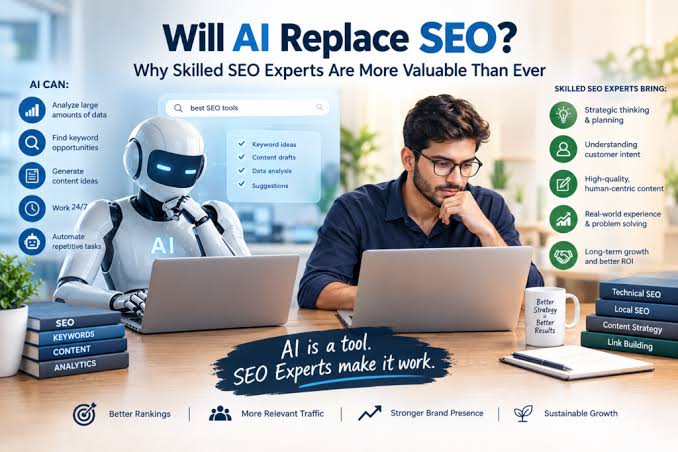
1,800 article ideas from a competitor’s website and then used AI tools to generate articles in bulk based on that list. The team’s initial excitement over the impressive results did not last long, as the mass-produced AI content soon negatively affected the website’s rankings, pushing them below the level they had been at before the process began.
This is not the only story of AI tool adoption. Since these tools became widely available to the public, they have attracted the attention of many different types of users. While they have helped some people multiply their productivity, they have also led many others into a downward spiral, destroying years of hard work because of a misunderstanding of how to use them effectively.
Table of Contents
New users of AI tools tend to overestimate their capabilities. This may stem from a desire to complete tasks more quickly or reduce costs by using AI instead of hiring experts and specialists. This is particularly common in content writing.
Although AI-assisted writing tools have existed for many years, their recent widespread adoption among the general public through numerous free services, such as ChatGPT by OpenAI, Gemini by Google, and Copilot by Microsoft, has also led to widespread misunderstandings about how these tools should be used in different professional fields.
This misunderstanding is especially common among people who use these tools as substitutes for experienced professionals without possessing sufficient expertise to determine whether the output is accurate and of high quality, or whether the tool itself is suitable for the task at hand.
However, a proper understanding of how these tools work can correct this misconception. Ultimately, they are just tools, regardless of how effectively they can simplify certain steps or accelerate specific processes.
Whether in writing, design, or any other field, AI tools cannot deliver a complete, ready-to-use product on their own. Overreliance on AI without consulting industry experts or reviewing and refining its output can lead to numerous errors. Consider the story of a programmer who used AI-generated code without reviewing it, only to end up deleting the website’s entire database.
That is why relying on experts and consulting qualified professionals remain essential, no matter how appealing the potential cost savings or productivity gains may be.
The most important thing to understand about using AI tools for content writing is that their capabilities are limited by the material on which they have been trained, including written content available on the internet. This limitation gives rise to several common problems and mistakes among users.
A quick look at statistics on user contributions to online content shows that Arabic-speaking users contribute approximately 5% of internet content, compared with more than 25% for English-language content.
This suggests that AI tools generally have a much larger body of English-language material to learn from than Arabic-language material.
This does not mean that AI tools cannot respond in Arabic. They certainly can. However, it means they may not offer the same level of effectiveness when it comes to producing well-written, grammatically correct Arabic that can be used without editing or revision.
In the following example, the tool provides reasonably good ideas—which is a separate issue that we will discuss shortly—but struggles to express them in grammatically sound language.
For instance, the first point states, “Your vocabulary and ability to use varied sentences increase,” which is awkwardly phrased. The second says, “where you must organize the ideas and arrange them in a consistent way,” containing logical, grammatical, and spelling errors. The third states, “You practice your memory,” which is an obvious linguistic error that needs no further discussion.
Therefore, AI tools cannot be relied upon to produce complete, publication-ready Arabic content, even on simple and straightforward topics. At the very least, a proofreader and editor should review the content to ensure linguistic accuracy before it is published.

AI tools have two fundamental characteristics that make them unreliable sources of information.
The first is that they rely on content available on the internet for training. This means their responses are limited by the information available online, much of which—even content published by well-intentioned people—contains inaccuracies, confusion, or misleading claims.
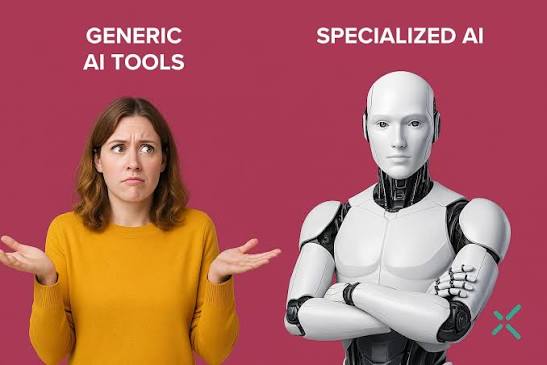
Although AI tools can perform a wide range of tasks, only a limited subset may be suitable for serious professional use without additional review. Most AI tools have specific areas of expertise in which they outperform competing tools, largely because their developers focus on improving performance for particular purposes and training them accordingly.
For example, DeepL is an AI-powered translation tool that focuses primarily on translation, unlike ChatGPT, which is a general-purpose tool that can also translate text.
The translation quality of the two tools can differ significantly, with the specialized tool generally offering better accuracy and linguistic suitability for certain translation tasks.
In this example, both translations may convey the intended meaning, but the first translation is more accurate, better written, and more appropriate for the context.
Start with SBYP
Explore products or create your account and sell before you pay.
OCTOBER 23, 2024
يمكن أن نعرّف نموذج العمل التجاري بأنه هو الإطار الذي يصف كيفية تكوين وتشغيل الشركات وتحقي...
Read more
OCTOBER 24, 2024
قبل أشهرٍ قليلة، اتّخذت شركة Casual لتخطيط الأعمال خطوةً جريئة، إذ استخرج فريق إنتاج المحت...
Read more
OCTOBER 31, 2024
خطوات إعداد خطة تسويقية فعالة\nلإعداد خطة تسويقية ناجحة، فلا بد من إتباع خطوات منهجية تضمن...
Read more